

The Full Story
Sifu Jeremy Gordon — Lineage, Legacy, and the Evolution of Jeetkunedo
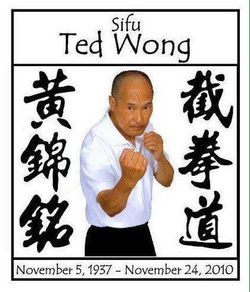
Sifu Jeremy Gordon holds a singular and historic position in the lineage of Jeet Kune Do (Jeetkunedo / JKD). He is the only known African American formally authorized to teach Jeetkunedo directly under Sifu Ted Wong, placing him unmistakably within the Bruce Lee → Ted Wong → Jeremy Gordon lineage.
This distinction establishes Sifu Gordon as:
-
A 2nd-generation instructor in Bruce Lee’s philosophical and scientific art of Jeetkunedo
-
A 1st-generation Ted Wong Jeetkunedo instructor
-
The highest and only known African American to achieve this direct lineage
Foundations Before JKD
Long before meeting Sifu Ted Wong, Sifu Gordon had already forged a deep and diverse martial foundation. He earned multiple black belts, competed and coached in combat sports, wrestled, and instructed fighters across disciplines. He had also achieved Jeetkunedo rank and instructorship under other instructors, while publicly teaching a system he formally registered as Hybrid Kickboxing (HKB).
HKB was conceived as a functional synthesis of:
-
Jidokwan Taekwondo
-
Shorin-Ryu Karate
-
Western Boxing
-
American Kickboxing
-
Wing Chun concepts
-
Basic wrestling and ground defense
A Lifelong Path in the Arts
Sifu Gordon’s training began before he could walk, a story often shared by family friend Tony Hamilton. His uncle, Lealon Gordon, was a martial arts and kickboxing champion featured in national martial arts magazines and trained under Robert Townsend, a prominent coach involved with Team USA and multiple combat disciplines. This lineage gave Sifu Gordon an early, authentic immersion in martial culture.
While attending Jackson State University in Jackson, Mississippi, Sifu Gordon continued his martial development. In 1997–1998, while training in a ballet room on campus, he formally coined the term Hybrid Kickboxing. Drawing from computer logic, physics, kinesiology, psychology, and philosophy, he began shaping a system that emphasized adaptability, efficiency, and personal expression. His approach differed from traditional schools, and although he rarely accepted new students, demand led him to begin teaching publicly.
Entering the Bruce Lee Lineage
Seeking deeper understanding of Bruce Lee’s art, Sifu Gordon pursued training with Sifu Ted Wong. He was invited by Bob Landers to attend a JKD training event in Tulsa, Oklahoma, arranging travel and lodging with the help of a longtime friend.
After demonstrating his abilities, Sifu Ted Wong accepted Sifu Gordon as a personal student. During seminars, Sifu Gordon often assisted in showcasing JKD footwork alongside other instructors. Fellow coaches affectionately nicknamed him “TLD – The Last Dragon,” a playful homage to martial arts cinema. On one occasion, Bruce Lee and Sifu Ted Wong even watched the referenced film with Sifu Gordon during a training gathering—one of many formative experiences shared over years of instruction.
Distinguishing JKD from HKB
As his role evolved, Sifu Gordon made a deliberate distinction between Jeetkunedo (JKD) and Hybrid Kickboxing (HKB):
-
JKD was reserved for advanced martial artists, rich in philosophy and personal responsibility. At the time, it was commonly advised not to teach JKD to students under 12.
-
JKD did not directly address youth programs, kickboxing competition, or the rapidly rising popularity of Mixed Martial Arts (MMA).
-
When techniques or methods diverged from strict JKD philosophy due to sport rules, modern weapons, or cinematography, they were taught under HKB—preserving the integrity of JKD while allowing innovation without online “gatekeeping.”
“JKD = Bruce Lee. HKB = JKD+”
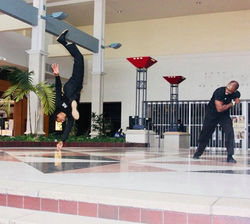
While teaching a JKD seminar in the Philippines alongside Sifu Rodney Hitchcock, Sifu Gordon was asked to demonstrate some of the more dynamic material seen in his online content. He did so playfully, framing it as an evolution of JKD.
When asked, “What is the difference between JKD and HKB?” his answer became foundational:
-
JKD (Jeetkunedo) is everything Bruce Lee taught as expressed through Sifu Ted Wong, especially from the later stages of the art.
-
HKB (Hybrid Kickboxing) is everything Sifu Gordon has added, adapted, or modified through personal research and experience.
In his words:
JKD = Bruce Lee’s art (via Ted Wong).
HKB = JKD+.
The “+” represents exploration—what Bruce Lee did not live long enough to teach or fully investigate, but encouraged his students to discover for themselves.
Present Day & Ongoing Legacy
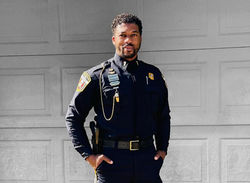
Today, Sifu Jeremy Gordon accepts both JKD and HKB students, with JKD+ representing the living evolution of the art. His professional experience extends far beyond the dojo:
-
Former SWAT Operator
-
Crisis Negotiator
-
Accredited Law Enforcement Training Academy Coordinator
-
Trainer of champions in Boxing, Kickboxing, Point Fighting, and MMA
-
Martial Arts Hall of Fame inductee
-
2026 Mississippi State Games Martial Arts Commissioner
This lineage is not symbolic—it is earned, documented, and lived.
Become Part of the Lineage
To train under Sifu Jeremy Gordon is to become a 3rd-generation student of Bruce Lee with real, verifiable lineage, grounded in philosophy, science, adaptability, and lived experience.
This is not the end of the story.
It is only the beginning.
 |  |  |  |
|---|---|---|---|
 |  |  |  |
 |  |  |  |
 |  |
Let’s Work Together
Get in touch so we can start working together.


